Did you know Liane Moriarty has sold over 20 million copies worldwide, and her Big Little Lies became the first novel by an Australian author to debut at number one on the New York Times Bestseller List? The female friendship thriller is the genre prestige TV keeps reaching for, because the dynamics between women who’ve known each other for decades carry the emotional infrastructure suspense needs. Every betrayal already has 15 years of subtext underneath it. While the female-friendship-thriller shelf was built around suburban moms and college reunions, the next wave is moving to trending modern settings, I’m talking wellness retreats, tradwife farms, and remote islands. A 2026 book like Imperfect Women that is gaining momentum is Perfect Modern Wife by Kristen Van Nest. In the book, a successful executive Audrey visits her old friend at a tradwife wellness retreat run by their estranged friend-turned-influencer and finds her crawling across the kitchen floor at 3 AM, hands raw and bleeding, chanting about being the “perfect modern wife.” According to Laura Donovan, Business Insider Writer + Author, Perfect Modern Wife is a “hilarious yet important satire examining the sneaky, insidious ways society controls women” and it has even been optioned for film by writer/director Joanna Tsanis.
Keeping in mind how the female friendship thriller is evolving in 2026, here are my 8 picks below, ranked by how deep each one cuts.
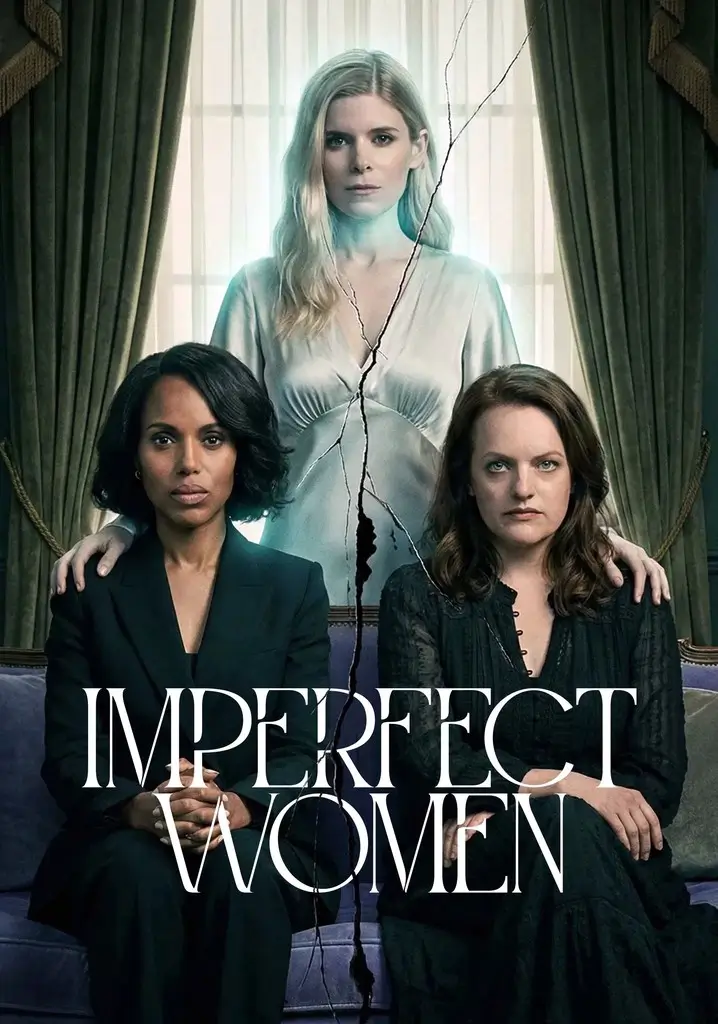
If you’ve spent the last week doom-scrolling through the “Imperfect Women” discourse, you’re not alone. The Imperfect Women Apple TV+ limited series premiered March 18, 2026, and somehow managed to become #2 on the streaming charts despite mixed Imperfect Women reviews on Rotten Tomatoes — which tells you everything you need to know about audiences right now. We’re HUNGRY for female friendship thrillers, especially ones where the real crime scene is the decades-long bond between women who know each other’s worst secrets.
The Imperfect Women show, based on the Imperfect Women book by Araminta Hall, has an Imperfect Women cast that includes Elisabeth Moss, Kerry Washington, Kate Mara, and Joel Kinnaman circling each other like predators with impeccable skincare. And yes, one of them gets murdered — but the real murder is the slow poisoning of trust between friends who look perfect from the outside. That tension? That “everyone has something to hide” energy? That’s what I live for. It’s also exactly what my debut novel “Perfect Modern Wife” explores, but with a tradwife influencer and a wellness retreat as the pressure cooker.
Here’s the thing about female friendship thrillers: they’re having a moment because they hold up a mirror to how we perform our lives for each other. Instagram galleries of brunch dates and girls’ trips that hide actual psychosis. Weekend plans that are actually complicated chess moves. Therapy sessions disguised as happy hours. The show gets that — and so do these eight books I’m about to recommend.
Whether you’re streaming the Imperfect Women TV series and wondering “What else should I be reading?” or you just finished all eight Imperfect Women episodes and need something darker to fill the void, this list has you covered. These are the books that nail what the show does best: making female friendships feel dangerous.
Table of Contents
- Why Books Like Imperfect Women Hit So Hard
- What Makes a Great Female Friendship Thriller?
- Imperfect Women by Araminta Hall
- Perfect Modern Wife by Kristen Van Nest (2025)
- The Lost Night by Andrea Bartz
- Big Little Lies by Liane Moriarty
- Social Creature by Tara Isabella Burton
- My Sister, the Serial Killer by Oyinkan Braithwaite
- Give Me Your Hand by Megan Abbott
- The Wife Between Us by Greer Hendricks & Sarah Pekkanen
- Looking for More Books Like Imperfect Women?
- FAQ
Why Books Like Imperfect Women Hit So Hard
Here’s what the critics got wrong about “Imperfect Women”: they looked at the plot mechanics and found them familiar. A woman is murdered. Friends are suspects. There are secrets. Standard thriller beats, they said. What they missed is that nobody’s watching for a jaw-dropper of a plot twist. People are watching for the *feeling* — the vertigo of realizing that your oldest friends are essentially still strangers. That the woman you’ve known since college might be capable of anything. That the version of herself she shows you might be only 10% of her actual personality.
Want a friendship-thriller you can finish tonight?
Read Perfect Modern Wife free — when successful executive Audrey visits her old friend Jessica at a dating retreat run by their estranged friend-turned-Trad Wife influencer McKinley, she can’t help but feel something is off, especially since they won’t let her see Jessica until the retreat is over.
★★★★★
“I absolutely loved this novella and devoured it on one sitting. When three old friends are reunited at a dating retreat, Audrey immediately knows something is wrong.”
— Heather Flaherty, Goodreads Reviewer
Female friendship thrillers work because they weaponize something we actually care about. A marriage ending in a thriller is sad. A friendship ending in one is terrifying — because friendships are supposed to be chosen. These are the people we picked. If they betray us, that means we failed at the most basic level of judgment. We failed to see them clearly, and they also failed to see us. That’s the real violence of these stories.
I know this because I’ve lived it. When I was writing my memoir, Where to Nest, there’s a chapter that takes place in Thailand about a “friendship breakup.” We always talk about breaking up with boyfriends or lovers and how devastating it is, but a friendship breakup is more devastating than anything. It feels like someone you’ve known your whole life has passed away — because suddenly that person who you relied on and called and who cared for you deeply and was always there for you is just poof, gone. But the fact of the matter is, as we grow older, sometimes we just naturally grow apart, and it doesn’t mean that either person is a bad person or that someone’s in the wrong. It’s just that we’ve changed and outgrown each other.
Stories like “Imperfect Women” hit so hard because we watch romcoms and consume so much content about love and loss around romantic partners, but there’s a lot less around friendship — the importance of friends and how absolutely devastating it can be to grow apart from them. Friendship breakups are also so devastating because you want to blame someone, you want to feel like someone did something wrong, but it’s just that two people have grown apart over time. And part of growth is letting go of people who don’t serve you anymore.
The books on this list understand that. They get why women gathering for a weekend trip, or running into each other at a coffee shop, or showing up at the same college, can be the setup for something genuinely dark. They’re not interested in jump scares or violence for its own sake — they’re interested in the slow erosion of trust, the way secrets compound, the way privilege and power can warp a friendship beyond recognition.
What Makes a Great Female Friendship Thriller?
Not all books about female friendships are thrillers, and not all thrillers about women are actually about friendship. The ones that work (the ones that haunt you) tend to have a few things in common. First, there’s complexity. None of your characters are straightforward villains or victims. Everyone has valid reasons for their behavior, even the monstrous ones. Second, there’s class consciousness, or at least awareness of how power operates within the friendship. Are these women equal? Who has more? Who’s performing more? What’s the actual cost of maintaining this bond.
Third, there’s usually a secret infrastructure that’s been in place for years before the “thriller” plot kicks off. The murder isn’t what created the toxicity. It just revealed it. The best female friendship thrillers are less about solving a crime and more about excavating a friendship, layer by layer, and finding something rotten at the foundation. Maybe it was always rotten. Maybe one person made it rotten. Maybe they all collaborated in rotting it together. The investigation is just the mechanism that forces the story out.
And finally — tone matters. These books need to feel *alive*. They need humor, or rage, or tenderness, or some combination. They can’t just be grim. They need to remind you why these women loved each other in the first place, or why they’re still trying to pretend they do.
1. Imperfect Women by Araminta Hall
When Imperfect Women dropped on Apple TV+ this spring, I knew a lot of my friends would be talking about it. The casting alone (Elisabeth Moss, Kerry Washington, Kate Mara, Joel Kinnaman) promised exactly the kind of “everyone has secrets, three women, somebody dies” prestige drama that hits the same nerve as Big Little Lies. The show is good. But the source material (Araminta Hall’s novel) is meaner. If you’ve been searching “where to watch Imperfect Women” or just finished the trailer and want to go deeper, the novel is the obvious place to start.
Hall isn’t writing about strangers who happen to know each other. She’s writing about a friend group that has been performing closeness for so long that none of them is sure how much of the friendship is real and how much is just years of agreed-upon stories. Three women, decades of shared history, a murder. Hall walks you through the group’s actual dynamic (who’s been envious of whom, who’s been lying to whom, who’s been carrying which version of “the friendship”) and you understand by about page 80 why this group was always going to end like this.
For me, the part of Imperfect Women that stays with me is how Hall writes the slow corrosion. It’s not one big betrayal that breaks the friendship. It’s a thousand tiny ones that the women have been collectively pretending not to see for a decade. (We all know how this works. We’ve all done some version of it.) When the murder finally happens, it’s almost a relief — the truth is finally too big to ignore.
The book also pulls off something the show can’t quite do in eight episodes: it gives you each woman’s interior life. You understand why Nancy made the choices she made. You understand why the others enabled it. You understand exactly how three so-called imperfect women become a system that can no longer correct itself. Hall skips villains altogether. She writes mothers and friends and women in their forties who’ve been smiling through too much for too long.
Who it’s for: If you’ve ever watched a friendship dissolve in slow motion and known you couldn’t stop it, or finished the Imperfect Women show and want the version with more interior access to each woman’s thinking, this novel is going to wreck you in a slower, deeper way.
2. Perfect Modern Wife by Kristen Van Nest

Perfect Modern Wife came out of a series of brunch conversations I kept having with friends who were the breadwinners in their relationships — making more money than their boyfriends or husbands, but still expected to handle all the cooking, cleaning, and housework. The casual acceptance of that imbalance kept gnawing at me. Then I went to Hampstead Heath in London and saw the women’s bathing pond — three generations of women, grandmothers and mothers and twentysomethings, all swimming together in a space that wasn’t organized around men’s needs. Something clicked. I rushed back to my flat and wrote the entire novella in 48 hours straight.
Here’s the pitch: when successful executive Audrey visits her old friend Jessica at a wellness retreat run by their estranged friend-turned-#tradwife influencer McKinley, she expects organic smoothies and sunset selfies. Instead, she finds McKinley crawling across the kitchen floor at 3 AM, hands raw and bleeding, chanting about being the “perfect modern wife.”
Perfect Modern Wife belongs on this list because it does what the rest of these books do (takes the language of female friendship, the trips and shared secrets and intensity of “we know each other better than anyone else”) and uses that exact language as the architecture of something genuinely sinister. McKinley uses sisterhood vocabulary to control. Nostalgia for who-they-used-to-be becomes a weapon. By the end, you understand why McKinley is doing what she’s doing, even though what she’s doing is indefensible. (One reader called it “women’s rage wrapped in dark comedy,” which is the line I now wish I’d put on the cover.)
The book is also a dark comedy. I wanted it to be funny — satirical about wellness culture, about the tradwife economy, about the specific way women perform authenticity online. There’s horror underneath the satire, but the surface is a kind of slow-burn dread mixed with the absurdity of trying to make organic almond milk while your friend is crawling around the kitchen at dawn.
Perfect Modern Wife has been optioned for film by writer/director Joanna Tsanis, who is currently writing the screenplay. Part Stepford Wives, part Midsommar. Sixty pages. Read in one sitting.
Who it’s for: If you’ve watched the rise of #tradwife content with a knot in your stomach, or recognized a version of yourself in the women in this list and need the version where someone finally writes the cult horror I’m pretty sure we’re all already living inside, this is for you. (Free download below — you don’t have to take my word for it.)
3. The Lost Night by Andrea Bartz
Here’s the thing about female friend groups: they’re usually built around a shared set of stories you’ve all agreed on. The night someone cried at the bar. The summer the four of you lived together. That weekend in 2009 you don’t fully remember, but unfortunately someone took the most unflattering, clearly blacked out pictures, so there’s evidence! I have a friend group like this. I assume you do too. The Lost Night by Andrea Bartz is the female friendship thriller built on exactly this premise.
Andrea Bartz’s The Lost Night asks what happens when the night the friend group tried to end nicely actually reveals there was tension and maybe a little resentment building up over the years. The narrator is Lindsay, a fact-checker in her thirties — she’s professionally good at noticing when stories don’t add up. A decade ago her friend Edie died in what everyone treated as a suicide. But the night before Edie died, the whole friend group was at a warehouse loft in Bushwick, getting blackout drunk. And Lindsay has been telling the same version of that night for ten years.
Then she rewatches old footage she shot herself, on a Sony Handycam (I’d love to see Gen Alpha try to use one of those), the way we did before phones, and her version stops matching. Bartz is a master of the unreliable narrator — Lindsay isn’t lying to us, she’s lying to herself, and you watch the lie come apart in real time.
For me the book is about the specific 30-something experience of looking at the woman you were at 22 and not being sure who she was. Bartz is good at the slow, queasy unease of realizing your own memory has been collaborating with everyone else’s memory to produce a version of events that nobody can verify. For me, that’s about the shame of who I used to be and who I have (thank you, baby Jesus) grown out of.
I read The Lost Night on a flight last spring and missed the announcement to put my window shade down for landing, I was so locked in.
Who it’s for: If you’ve ever been in a group text where someone shared an old photo of you and it made you cringe, but then crack up, this is for you!
4. Big Little Lies by Liane Moriarty
I grew up in New Canaan, the town The Stepford Wives was filmed in, so I can personally relate to what Liane Moriarty is doing in Big Little Lies. The book is the gold-standard female friendship thriller, set in an Australian beach town, but the dynamics are universal: school drop-off as a battleground, mothers performing solidarity while keeping running scoreboards in their heads, the way a friendship can be eighty percent genuine warmth and twenty percent silent competition and jealousy over whose kid is reading earlier. It’s what happens when very competent, intelligent women are slightly bored and turning their genius into filling their days tormenting each other to pass the time.
The plot of Big Little Lies, briefly: it’s a school fundraiser gala. Someone dies. Moriarty opens with the death and walks you backward through six months (birthday parties, coffee dates, parents’ night meetings, marriages being held together with prescription medication and managed expectations) to show you why nobody who attended that gala is genuinely surprised.
What I love about it is that Moriarty refuses to write a clear villain. There’s a man who hits his wife, sure. But the women around her are also failing her in small, observable ways: mistaking her bruises for clumsiness because it’s easier, looking the other way at parent-teacher events. In real life, there are so many stories of victims not being believed. Because believing them is inconvenient. It means aspects of your own life could change and you could be part of the reason it was allowed to go on for so long. Books that make you question how you’d handle a situation, I believe, make us more empathetic and better people. But not the preachy ones, which this one isn’t, it’s so intriguing you can’t put it down.
For me, a lot of books don’t get to the depth of making us question who is “the villain” in complex situations like this. “Bad writing” to me makes black and white characters, when in reality, everyone (maybe except Epstein) is somewhere in a gray area. Moriarty writes mothers and neighbors and friends, all of whom have full interior lives, all of whom are partially complicit, and she makes you sit in the discomfort of recognizing yourself in one of them.
The HBO adaptation got a lot of buzz, but the book has more time. It can sit longer in the small moments (Madeline picking a fight at a coffee shop, Celeste second-guessing a bruise on her arm) that the show has to compress.
Who it’s for: If you’ve ever heard of something bad happening to someone close to you, and wondered if you could have done more or why you may have not seen it coming. I know I’ve personally dealt with this, and it’s sadly so common because #metoo didn’t really fix much unfortunately.
5. Social Creature by Tara Isabella Burton
My high school job was working catering in a public castle/mansion in my hometown’s public park for weddings that all cost at a minimum six figures. In my town, I was a “townie” which is what they called the “poor people” who lived within walking distance of our tiny downtown. This gave me a first-hand lens into haves versus have nots. Tara Isabella Burton wrote the book that lives inside that gap.
Social Creature is about Louise, who has three jobs and a barely-working roommate situation, and Lavinia, who has a Park Avenue apartment, a trust fund, and the kind of glamorous social life Louise has only seen on Instagram. Louise meets Lavinia at a party, gets pulled into her world, and wants in. Because who doesn’t want to be surrounded by expense, nice, and gorgeous things. That’s capitalism, baby!
She’d do ANYTHING to keep living this new lifestyle, so you can probably see where this is going. This is The Talented Mr. Ripley but with Instagram, and Louise eventually does some things you really do not want her to do (not saying more to avoid spoilers). But what makes the book work, for me, is that Burton refuses to make Louise simple. Louise is more than an aspirational social climber. She’s also lonely, broke, watching her one rich friend post brunch photos while she’s eating ramen for the third night in a row (been there). The book gives you all of that context and then asks: at what point would YOU break?
I will admit, reading it, I had to put the book down a few times because I recognized my own class-climbing impulses too clearly (sorry, rich high school friends). There’s a moment where Louise watches Lavinia tip a bartender like the money doesn’t matter and feels her own poverty in her teeth. Once again, we’ve all been there when we’ve been on a budget.
Burton also nails what Instagram has done to all of this. We can all SEE the lifestyle now, in HD with a bijillion filters, every day. The Hamptons house, the brunch table, the pre-curated friend group. We didn’t used to be able to see any of this unless we were already in the room. Now we’re all in the room, but most of us are still on the wrong side of the door, and Burton wrote a thriller about what that does to a person.
Who it’s for: If you’ve ever been at a party where everyone else was wearing wayyy fancier designer clothes and felt a tang of embarrassment, this book sees you.
What if your chronically online friend suddenly went MIA?
Read Perfect Modern Wife free — when successful executive Audrey visits her old friend Jessica at a dating retreat run by their estranged friend-turned-Trad Wife influencer McKinley, she can’t help but feel something is off, especially since they won’t let her see Jessica until the retreat is over.
“The premise of a friend shifting from a ‘boss babe’ to a ‘trad wife’ is all the main stream right now, but it’s written in an accessible and entertaining way.”
— Lucy Steele, Goodreads Reviewer
6. My Sister, the Serial Killer by Oyinkan Braithwaite
In my early 20s, my friend had a sister who was so hot, she could get away with anything. Nicknamed “the Paris Hilton of Boston,” she’d give advice like “hand jobs don’t count as cheating” or “coke is cheaper than a redbull.” She’s a life coach now (no, I’m serious, smh).
My Sister, the Serial Killer is the kind of book you can finish in one sitting and then need to lie down for an hour to process. Oyinkan Braithwaite wrote a psychological thriller AND a dark comedy AND a sister-relationship novel in 226 pages, set in Lagos, Nigeria, narrated by Korede (an exacting nurse) about her younger sister Ayoola, who is beautiful and keeps killing her boyfriends.
That’s the setup. Korede gets the call. Ayoola has done it again. Korede grabs the bleach and the gloves and helps her sister clean the body, dispose of the boyfriend, and pivot back to normal life. Korede has done this before. Korede will do it again.
My Sister, the Serial Killer asks one question and asks it in about a hundred uncomfortable ways: at what point does sister loyalty become moral catastrophe? Korede knows what Ayoola is. She knows Ayoola will do it again. She knows the boyfriends were not in fact threats to Ayoola in the way her sister claims. She helps anyway. Because Ayoola is her sister, there’s a blood bond.
For me, the book is also a master class in how beauty privilege works. Ayoola is gorgeous. People (including Korede) keep extending her grace they would never extend to anyone else. Ayoola posts on Instagram, gets her hair done, charms the next victim. Korede watches and knows and does the dishes. (We’ve all known an Ayoola, just hopefully not the murder version.)
It’s also surprisingly funny. Braithwaite never flags the comedy. She writes it deadpan. Korede describes which bleach works best for blood the way another narrator might describe choosing a salad dressing. The book trusts you to find the horror funny without telling you to.
Short novel, vicious payoff, asks a question about female loyalty that actually doesn’t have a clean answer. My Sister, the Serial Killer doesn’t give you one. You don’t get one in real life either.
Who it’s for: If you’ve ever covered for someone in your family because the alternative felt impossible, or watched a beautiful person get away with something nobody else could, this book is going to hit you in the ribs.
7. Give Me Your Hand by Megan Abbott
There’s a thing I think about all the time: in a patriarchal society, where men still control most of the actual structures of power, women end up competing with each other for proximity to that power. We compete for the alpha man’s approval, the boss’s mentorship, the spot on the prestigious team. bell hooks wrote about this in Feminist Theory: From Margin to Center all the way back in 1984 — the framework hasn’t aged. Megan Abbott’s Give Me Your Hand is set inside one specific version of this dynamic: a research lab where two women are competing for the same fellowship, and they happen to share a secret one of them learned about the other when they were teenagers.
That’s the setup, and Abbott is interested in something specific: how women weaponize history against each other. Not violently. Not dramatically. Just… knowing. One woman knows. The other woman knows that she knows. The fellowship competition is on. They smile at each other.
Give Me Your Hand is a psychological thriller about female career rivalry that refuses to be either a friendship novel or a villain novel. Kit and Diane have a real bond. They also have good reasons to want each other to fail. Abbott writes them in dual timelines (high school and the research lab present-day) and the book asks: at what point does shared history become a weapon?
For me, the book is also smart about how women internalize competition. We’re trained to support each other publicly while keeping a running scoreboard privately. (If you’ve ever congratulated a friend on something and felt your stomach drop a little, you know the dynamic.) Abbott doesn’t moralize about this. She just shows you what it looks like when two ambitious women have known each other too long and want the same thing — and how the patriarchy that pits them against each other isn’t even in the room, it just structured the room.
Who it’s for: If you’ve ever been in a workplace, friend group, or science department where there was a “queen bee” and felt the gravitational pull of competing for her approval, or known that the woman you’re closest to is also the one who could most efficiently end your career, Give Me Your Hand is going to hit different.
8. The Wife Between Us by Greer Hendricks & Sarah Pekkanen
I once had a high school boyfriend who used to tell me I was very bad at making friends. The design of that (and it was a design) was that it made me rely on him more for my social life. It also made me feel more isolated from everyone around me, because if I believed him, then I assumed everyone secretly didn’t like me, so I leaned in harder on him. That is the actual mechanism of gaslighting. There is no better way to control someone than to convince them they can’t trust themselves.
The Wife Between Us by Greer Hendricks and Sarah Pekkanen is a marriage thriller built on exactly that dynamic — but the gaslighting in this book is between women, not between a man and a woman, and the architecture of the lie is the novel. I’m not going to spoil the twist (it’s the kind of twist where you flip back to page one and start re-reading), but I will say this: Hendricks and Pekkanen write the slow construction of an alternate reality, the kind one woman can build inside another woman’s head, and you only realize how thorough the construction was at the end.
The book is told in dual perspective (the wife and the mistress, the way you’d expect) and Hendricks and Pekkanen know that you’ve read enough thrillers to think you know how this story goes. They count on you assuming. They build the entire novel around what you assume. The Wife Between Us is essentially a clinic on how to write an unreliable narrator who never technically lies to you.
For me the book also sits with something specific that gaslighting fiction does well: it makes you remember every time you doubted yourself when you were right. Every time you were told you were imagining it. Every time you went back and apologized to someone who was, in fact, the one in the wrong. (We all have that list. It’s an uncomfortable list to revisit.) The Wife Between Us is a clarifying read, not a comforting one.
Who it’s for: If you’ve ever been in a relationship where you couldn’t tell whether you were the problem or whether you were being told you were the problem, or you’ve read enough psychological thrillers to think you can spot a twist coming and want one that genuinely catches you, this is for you.
Looking for More Books Like Imperfect Women?
What to Read Next?
The Storm Reaper is my domestic thriller set in a community so small that the bartender, the grocer, and the cop’s ex-hookup are all people you see before breakfast. Everyone knows everyone’s business on this island. And a serial killer has been relying on exactly that closeness to keep everyone quiet for a decade.
Want a female-friendship thriller?
Read Perfect Modern Wife free — when successful executive Audrey visits her old friend Jessica at a dating retreat run by their estranged friend-turned-Trad Wife influencer McKinley, she can’t help but feel something is off, especially since they won’t let her see Jessica until the retreat is over.
★★★★★
“And just like that pie I devoured this book — a fun, modern twist on how far friends will go to honour that friendship pact.”
— Tami, Goodreads Reviewer
FAQ
What shows are like Imperfect Women?
If you’re searching for shows like Imperfect Women, the closest matches on streaming right now are Big Little Lies (HBO), Sharp Objects (HBO), The Undoing (HBO), and The White Lotus (HBO) — all built around women whose carefully maintained lives are hiding something corrosive. Killing Eve if you want the female-relationship intensity dialed up to obsession. Pretty Little Liars: Original Sin for a younger-skewing version of the same secrets-between-friends formula. Most of these started as books, which is why people who love the show end up looking for books like Imperfect Women — the source material gives you the interior monologues that screen adaptations have to compress.
What series is similar to Imperfect Women?
For a TV series similar to Imperfect Women, the closest direct match is Big Little Lies — same coastal town, same beautiful broken women, same dead body framing the whole story. After that: The Affair, Apple Cider Vinegar (the wellness-influencer-as-villain version), Yellowjackets (female friendship that gets worse as the timeline progresses), and The Perfect Couple on Netflix. If you want a book series instead of a TV series, Liane Moriarty’s books all share Imperfect Women’s DNA — pick any of hers and you’re set. Below are the eight book recommendations that hit the same female-friendship-thriller nerve.
Is Imperfect Women based on a book?
Yes — the Imperfect Women Apple TV+ series is based on the Imperfect Women book by Araminta Hall, published in 2022. The show follows the book fairly closely, though like all adaptations, it makes changes for pacing and screen time. If you’re hooked and can’t wait for the weekly episode rollout, the book will give you more interior access to each character’s perspective and psychology — including details the show had to condense across its eight episodes.
What are the best books about female friendship gone wrong?
If we’re talking specifically about female friendships that deteriorate or transform in dark ways, the books on this list are your best bets. But if you want the absolute gold standard, “Big Little Lies” by Liane Moriarty is the one that set the template. It’s a book about women who are forced into proximity and discover they actually despise each other — or that they despise themselves in proximity to each other. It’s the closest thing the genre has to a perfect execution.
Are there more shows like Imperfect Women?
If you’re looking for shows with the same energy as “Imperfect Women,” the obvious recommendations are “Big Little Lies” (based on the novel) and “The White Lotus” anthology series, which uses similar themes of women in privileged spaces where something darker is lurking. You might also enjoy “Killer Eve,” which is about a different kind of female relationship (obsession between a detective and a serial killer), and “The Undoing,” which is also built around the question of whether you actually know your friends and partners. All of these deal with the theme of hidden depths and female characters who aren’t what they seem.
What order should I read books like Imperfect Women?
Start with “Imperfect Women” itself if you want to deepen your experience from the show, or start with “Big Little Lies” if you want to understand the gold standard of the genre. After that, the order depends on what you’re in the mood for. “The Lost Night” is unsettling and psychological; “Social Creature” is claustrophobic and seductive; “My Sister, the Serial Killer” is short and dark and funny; “Give Me Your Hand” is about intellectual competition; “The Wife Between Us” is built on twists; and “Perfect Modern Wife” is satirical and dark and about the specific resentment of women in their 30s looking back at their 20s. Choose based on mood rather than sequence.
Some links in this post are affiliate links, meaning I may earn a small commission if you buy through them — at no extra cost to you.

Leave a Reply